
About

News

Campaigns

Blogs

Join

Internships

Resources

Contact us

Join the movement for a more livable city!

Membership in Livable City is a small investment for more joy in your life and that of your fellow city-dwellers! Members receive our impressive Path to a Livable City, invitations to special receptions and regular opportunities to make a difference! Click here to join online.

To sign up for Livable City news and alerts, click here.

Livable City works to create a San Francisco of great streets and complete neighborhoods, where walking, bicycling, and transit are the best choices for most trips, where public spaces are beautiful, well-designed, and well-maintained, and where housing is more plentiful and more affordable.

Sunday Streets is back in 2010, with more events in more neighborhoods

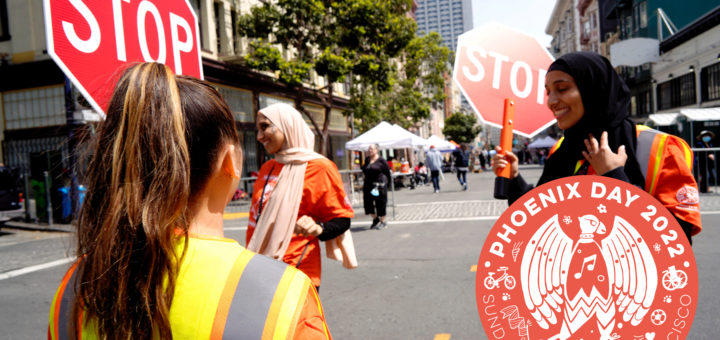
Sunday Streets transforms city streets into safe, car-free recreational space for walking, cycling, jogging, dancing, yoga, and other activities.

In 2010, we are planning to hold nine sunday events, on the scale of the previous events. We plan to return to the successful routes along the eastern Waterfront, Mission District, and Golden Gate Park and Great Highway, but may open other routes as well. We also hope to create a regular, once-a-week car-free space somewhere in the city.

  • March 14: Embarcadero, from Fisherman’s Wharf and Pier 39, south to China Basin and Terry Francois Boulevard.
  • April 11: Golden Gate Park and Great Highway. This event will coincide with the World Health Day 2010 “1,000 Cities, 1,000 Lives” event, as San Francisco joins thousands of cities hosting simultaneous car-free events worldwide.
  • April 18: The Bayview, along Third Street from King and Fourth streets (Caltrain station) to Bayview Playground.
  • May 23: The Bayview, in conjunction with the Third Street Corridor Project and Bayview Merchant’s Association’s “Third Street Festival”
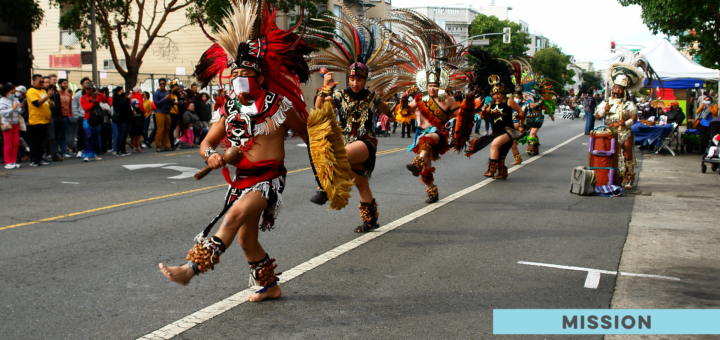
  • June 20: Mission, along Valencia and 24th streets
  • July 11: Mission, exact location to be determined
  • Aug. 22: Great Highway/Golden Gate Park
  • Sept. 19: Western Addition, exact location to be determined
  • Oct. 24: Civic Center/Tenderloin, exact location to be determined

Livable City has served as the project manager and fiscal agent for Sunday Streets since it began in fall 2008. We work with the Mayor's Office and various City departments, including the Shape Up Coalition and Health Department, as well as other nonprofit and community partners. The events have been supported by generous private donations and in-kind support from city agencies.

For more information, or to let us know what you liked about the events, or to give us your ideas about routes and events in 2010 and beyond, use the Sunday Streets website. To donate to Sunday Streets, use Livable City's secure web site, and click the button to let us know your contribution is for Sunday Streets.

MTA's latest parking proposals will mean better transit, less traffic, easier parking. Speak up in support today!

Managing on-street parking intelligently is essential to livable and vital neighborhood commercial streets. Sound parking management makes the short-stay, high turnover parking that merchants need available at the times they need it most. Good parking management reduces traffic generated by drivers cruising for parking spots. Good parking management generates more money from meter fees than from fines. Good parking management encourages office commuters to use transit, and encourages long-stay parkers to park off-street, leaving convenient on-street parking for shoppers, diners, and theater- and movie-goers. Good parking management discourages overflow parking into adjacent residential neighborhoods.

San Francisco's Municipal Transportation Agency held a public hearing on proposed changes to parking meters on Tuesday, October 20. MTA's SFpark program ("circle less, live more") have done an outstanding job creating a proposal that is rigorous, fair, and based on extensive research and outreach to stakeholders. SFpark's proposal was effusively praised by parking guru Donald Shoup as 'pathbreaking'. It is some of the best work MTA has done in its nine-year history, and will move on-street parking management into the 21st Century.

Currently, parking meter hours extend from 8am to 6pm from Monday through Saturday in all San Francisco neighborhoods, except for the Port of San Francisco's meters along the Embarcadero, which operate until 11pm seven days a week. MTA is proposing extending meter hours from 11am to 6 pm Sunday citywide, and until 9 pm or 12am in certain neighborhoods, based on occupancy. The proposal differs greatly from the recent Oakland parking debacle, in that it is:

  • Strategic – MTA's proposal is based on sound policy criteria and data collection. While the changes will increase revenue, it is part of a larger strategy to make parking more convenient and achieve overall goals for Muni reliability, comercial vitality, and climate protection.
  • Informed – MTA did extensive interviews with stakeholder (merchant groups, transportation advocates, business associations, etc.) to help make the proposal as smart and sensitive as possible.
  • Locally responsive – unlike today's one-size fits-all meter hours, the current MTA proposal is tailored to the needs of specific commercial district, based on neighborhood land uses, parking availability, and peak demand, yet keeps the system as simple as possible by proposing just three evening meter hours – 6pm, 9pm, and midnight - weeknights and Saturdays, and unform citywide hours on Sunday.
  • Convenient time limits will be extended to four hours in the evening, and two hours during the day, giving folks enough time for, say, dinner and a movie, or a long lunch. SFpark's smart meter retrofit will allow wider use of digital parking cards and credit cards, which will mean no more pocketsful of quarters necessary.
  • Interactive – Implementation will be accompanied by through outreach plan to merchants, residents, and visitors.

A map of the extended hours proposal is available here [pdf]. The full report is available here [pdf].

Despite being well recieved by parking experts and some neighborhood merchants, the Mayor's office bullied MTA into tabling the proposal. Three MTA directors are working to bring it back, and recently it appears that the Mayor's opposition is softening.

Please email the MTA Board and Mayor Newsom in support of the proposal:

Tom Nolan, Chairman, SFMTA Board of Directors
MTABoard@SFMTA.com

Mayor Gavin Newsom
gavin.newsom@sfgov.org

As of today, the date where the proposal will be considered for adoption by the MTA board is not scheduled, but we will let you know when we do. Emails to the mayor and MTA board between now and then are very helpful!

New garages in old buildings

The City's Planning Code requires off-street parking in new buildings across much of the city. However, off-street parking is not required in buildings built before off-street parking requirements were established (1955 for residences and 1960 for non-residential uses) or in more recent buildings which were granted exemptions, so long as those buildings don't add housing units or change their use. Garage additions in such buildings are purely voluntary, and currently don't require any special planning approval.

Adding garages to existing buildings can compromise the livability of neighborhoods. They can remove scarce housing or neighborhood-serving storefronts. They can make streets less safe for pedestrians and cyclists. They can disfigure historic buildings, destroy front gardens, and remove street trees. On commercial streets, they remove on-street parking and loading that serve merchants and provide meter revenue to maintain the transportation system.

Garage additions can actually reduce the amount of available parking in neighborhoods. Most require the removal of one or more on-street spaces, yet many garages are not used to store a car. Geographer Mary Brown found that garages added to the Mission District neighborhood she studied had eliminated over 40% of on-street parking spaces, yet only half of the garages were used to store a car, generating little increase in neighborhood parking while making the neighborhood less green and walkable.

Two proposals to address the issue of garage additions are coming forward. On December 17, the Planning Commission discussed a proposed policy on adding garages to existing buildings.

The staff proposal is not to amend the Planning Code, but rather to create a policy to guide staff when deciding whether to approve or disapprove the addition of a non-required garage. If the Planning Commission adopts the proposed policy, the Planning Department will generally disapprove of garage additions to existing buildings which:

  • remove a residential unit;
  • remove 20% or more of residential unit
  • have an adverse impact on an historic building
  • remove three or more on–street parking spaces
  • remove one on-street parking space to create a single off-street parking space
  • don't provide at least 6' clear passage on sidewalks
  • remove an existing street tree
  • are inconsistent with existing General Plan policy, Design Guidelines, and Zoning Administrator bulletins.

Livable City supports these policies, which will better protect the interest of neighbors in maintaining safe and livable streets and neighborhoods. We also welcome the Planning Department's proposal to work more closely with the MTA to lessen the impact of garages on walking, cycling, and transit, and with the Public Works Department to lessen the impact of garages on street trees and sidewalks.

We support two further changes to the policy. First the final version should be clearer about which sorts of garage additions will be approved or disapproved by the Planning Department. Second, since garage additions have such a potential impact on the safety, livability, character, and parking supply of neighborhoods, the Planning Code should be amended to require garage additions to have the same 30-day neighborhood notification requirements as other building additions and changes of use.

This policy complements two garage-related ordinances introduced at the Board of Supervisors. Supervisor Ross Mirkarimi introduced legislation requiring new and renovated buildings to hide parked cars from view behind street-level active uses, like storefronts and residential entrances. Supervisor David Chiu has introduced legislation to prevent the loss of existing rental housing from garage additions, and discourage new garages and driveways on narrow residential streets in Chinatown, North Beach, and Telegraph Hill. The Planning Commission will hear these ordinances in January.

Livable City also supports changes to the Planning Code so that new buildings and renovations to existing buildings can be granted exemptions from off-street parking requirements to further these same General Plan goals – preserving housing, maintaining active pedestrian-oriented ground-floors, minizing impacts on cyclists, pedestrians, and transit, and restoring historic buildings.

Coming soon: better buildings for San Francisco's neighborhoods

Great streets and public spaces are essential elements of a Livable Neighborhood. Another essential element is good buildings which frame and engage those streets. Livable City's Livable Neighborhoods campaign is working to bring a simple set of rules for creating pedestrian-friendly buildings to every San Francisco neighborhood. These rules include:

  • Storefronts on non-residential ground floors in mixed-use areas of the city, with lots of transparency to allow the passage of light and views in. Transparent storefronts create interest for passersby, and enhance safety by providing 'eyes on the street'. Security gates or shutters for closed stores shouldn't be solid, and should fold away from view when the stores are open.
  • High ceilings on non-residential ground floors create attractive, light-filled spaces that can accommodate a variety of uses. They also lift the first residential floor a bit further from the street, which makes that housing more livable. Ground floor cieling heights of around 14' should be required for non-residential uses, so long as it doesn't mean losing a floor of housing.
  • Pedestrian-friendly building fronts residential buildings should provide a pattern of porches, front stoops, or building lobbies at ground level to create safe and walkable neighborhoods.
  • Hide parking from view, where it is provided at all. Parking should be underground wherever possible, freeing up builidng space for jobs, housing, and neighborhood-serving uses, but at the very least from view behind active residential or commercial uses. Garage openings should be compact in size, to keep building facades lively, minimize conflicts with pedestrians, and minimize the loss of on-street parking and loading spaces.
  • Provide visual interest and safety by avoiding long blank walls. Utility cabinets, meters, and the like should be minimized, and placed in less prominent locations.

The Market & Octavia, Balboa Park, and Eastern Neighborhoods Planning Code changes, approved in 2008, require active street-fronting uses at ground level, and parking hidden from view, in several of the city's residential and mixed-use neighborhoods. Livable City championed those changes, and has been working to extend them citywide.

Supervisor Ross Mirkarimi, author of the Market & Octavia planning controls, introduced legislation on November 3rd to require "active, attractive, and pedestrian-oriented ground-floor street frontages for new and renovated buildings" in the city's Neighborhood Commercial (NC), Commercial (C), and Residential-Commercial (RC) districts. Livable City enthusiastically supports this legislation, which will improve buildings and streets across San Francisco by extending existing active-use controls to most mixed-use districts of the city.

San Francisco voters reject Mid-Market billboards, support advertising limits on public property

San Franciscans upheld their decades-old opposition to outdoor advertising on Election Day (November 3), rejecting Proposition D by a margin of 54%–46%, and approving Proposition E by 58%–42%.

Proposition D would have permit large new general advertising signs (aka billboards) along Market Street between 5th and 7th streets. Signs can be up to 500 square feet in size, with no limit on the number of signs per building. Signs may project up to 10 feet over the sidewalk, as much as 25 feet above rooftops, and be 50' or more in height. Signs could have been brightly illuminated, flash and rotate, and would have been brightly visible from outside of the district. The measure would have given a private entity, the Central Market Community Benefit District, planning powers now held by the city's Planning Commission, including creation of a signage plan, approval of individual signs, and disbursement of community benefit funds.

Livable City worked with San Francisco Beautful on the 'no' campaign. Propostion D's proponent, property owner David Addington, outspent the opposition by nearly 20 to 1, saturating households with glossy mailers. San Franciscans saw through it, and rejected the measure.

Proposition D did allow us to talk about what will help create a more livable, sustainable, and vital Mid-Market neighborhood. Mid-Market is Livable City's neighborhood, and we have worked for many years to make it better. Our Mid-Market strategy and action plan can be found on our Mid-Market neighborhood page.

San Franciscans also approved Proposition E, which bans advertisements on city-owned buildings, and limits the amount of advertisements on San Francisco city property, including on city streets, transit shelters, and transit stations, to 2008 levels.

Better Streets draft available for public review

Better Streets is a joint effort by several city agencies to improve the design of San Francisco's streets and sidewalks.

Better Streets began over two years ago, and has since produced a pattern book of street types which are a great improvement over the automobile-centered "local street -collector- arterial" street classfication scheme common in most US cities. The Better Streets "typologies" respond to land use (residential, comercial, industrial, and so on), street width, and the street's role in the transportation system.

Although its sponsors call it the "Better Streets Plan", so far it falls well short of being a plan, nor does it deal with the whole street. Important tasks, like identifying which streets are of what type, and creating standards for essential elements of successful streets (street lighting and pedestrian-friendly building fronts, for example) are missing so far. The Better Streets project also shied away from addressing the speed and volume of traffic, two critical elements for creating safe and livable streets. Governance (how city agencies plan and coordinate street projects) and a strategy for funding and implementation also need to be addressed.

The Better Streets final draft is available on the Better Streets web site: www.sfbetterstreets.org. You can comment on the draft plan via the Better Streets web site, or email Better Streets (info@sfbetterstreets.org).

Preparing for Peak Oil

'Peak Oil' is a term used to refer to the peak of global oil production ('production' is something of a misnomer; 'extraction' is more accurate). After the peak, the amount of oil extracted worldwide will inexorably decline. Oil is a finite resource, and there is less and less debate as to whether oil extraction will peak and then decline; the debate is increasingly about when it will happen. Some energy experts, like Princeton Professor Ken Deffyes, think oil extraction has already peaked, while others foresee a peak within the next few years, and still others predict a peak after 2020. Other fossil fuels, including natural gas and coal, are also subject to depletion, and extraction of these fuels will also peak and decline in the future. Fossil fuels are the world's most important sources of energy, and are both used directly for transportation, heating, and cooking, and also generate most of the world's electricity.

Because of the lack of transparent information about the state of the world's oil reserves, uncertainty about the impact of technology on oil extraction, the turbulence created by political and economic "above ground" factors, and strong economic incentives for both governments and oil companies to artificially inflate their declared reserves, it is likely we won't know that peak oil has happened until after it has happened.

The Board of Supervisors created a Peak Oil Preparedness Task Force to advise the city on how to prepare for peak oil. The task force released its report and recommendations in March. Livable City was asked to comment at a recent Board of Supervisors hearing on the report.

Goodbye Parking and Traffic. Hello Sustainable Streets!

The San Francisco Municipal Transportation Agency recently announced an agency-wide reorganization plan. MTA was created almost a decade ago by Proposition E, which merged the Municipal Railway (Muni) and the Parking and Traffic Department. Proposition E also reconfirmed and expanded the city's transit first policy, prioritizing the movement of transit, pedestrians, and cyclists over the movement of private autos on San Francisco's streets.

The two agencies proved hard to integrate into a singe one. The reorganization plan aims to finally create "An organization that moves beyond the old model of two large agencies in one to firmly establish the concept and function of one SFMTA"

The plan includes a new Director of Sustainable Streets, tasked with integrated planning for all transportation modes, including sustainability and climate change initiatives for the MTA, urban design and neighborhood planning, transportation engineering, capital planning, and improving regional coordination. These functions are currently split between MTA's Planning and Parking and Traffic departments.

Livable City has long advocated a more comprenensive and integrated approach to streets with a goal of making every San Francisco street a complete street. We are encouraged by MTA's recently announced plan, and look forward to the two-step implementation between now and January 2010.

PARK(ing) Day 2009 celebrates streets as public space

Friday September 18 was PARK(ing) Day, a annual day in which folks around the world take back parking spaces for a day, and transform them into temporary public parks of all sorts. PARK(ing) Day was invented by San Francisco's Rebar Group in 2005, and has since spread to cities around the globe.

Streetflims documented PARK(ing) Day 2009 in San Francisco:

Mission Streetscape plans take shape

San Francisco Planning Department held their fourth public workshop for the Mission Streetscape Plan on August 12. The workshop focused on concept designs for specific sites in the Mission District. The Planning Department's Mission Streetscape web page shows both typical plans for streets of a similar type, as well as proposed neighborhood gateways and public open spaces.

Livable City helps ensure safe and secure housing for residents of accessory units

Accessory units, also called secondary units or in-law units, provide housing for thousands of San Franciscans. Accessory units fit into existing buildings, and are often found on the ground floors of one-, two-, or three-unit buildings, or above shops on the city's commercial streets. Legislation championed by Livable City, to encourage bringing accessory units up to housing and building code while preserving existing tenant protections, was unanimously approved at the Board of Supervisors this month.

Changes to the city's planning code in the 1950's and 1960's restricted such housing units by imposing limitations on the number of units on a residential or commercial lot, and by requiring an off-street parking space for each unit. Nonetheless, thousands of units were built before these requirements were imposed, and thousands more were built without permits over the last few decades. Units built before 1980 are subject to rent control, even if built without permits.

These units (no one is quite sure how many, although estimates run as high as 40,000) are a significant and affordable housing resource for San Francisco. Other cities, notably Portland, Vancouver, Seattle, and Santa Cruz, have taken steps to legalize new and existing units, and even to encourage them in transit-served neighborhoods. Until recently, however, dealing with accessory units was considered the 'third rail' of San Francisco politics, and previous efforts to legalize them had failed.

Livable City has supported legalization of these units in transit-served areas of the city since our inception. We supported planning code changes to allow greater density in transit-rich residential and commercial districts (while retaining controls on height, building setbacks, and open space requirements), which were approved in Hayes Valley, Duboce Triangle, and parts of the Mission in 2008, after a lengthy neighborhood planning process. These new zoning districts, RTO (Residential Transit-Oriented) and NC-T (Neighborhood Commercial Transit-Oriented) also have no minimum parking requirements. These planning code changes removed the Planning Code barriers to legalization. A provision of the city's building code, however, threatened to negate existing tenant protections when units were brought up to housing and building code.

Supervisor Ross Mirkarimi sponsored legislation to provide for amending the existing certificate of occupancy for existing buildings when they are brought up to code, preserving the status quo for rent-controlled units. The legislation was supported by both tenants groups and the San Francisco Apartment Association, and praised in a recent Chronicle editorial ("A Truce in the Housing Wars", June 13 2009).

Further Planning Code changes to legalize accessory units are currently prohibited, until the city completes its court-mandated update of the General Plan's Housing Element. We hope to see more progress on legislation that protects and improves accessory units once the Housing Element is adopted, sometime in 2010.

Creating a more livable Northeast Waterfront

San Francisco's Northeast Waterfront stretches along the Embarcadero from the foot of Market Street to Fisherman's Wharf. The shift to container shipping in the 1960s, which made the Northeast Waterfront's finger piers largely obselete, and the removal of the Embarcadero Freeway in the 1990s, set in motion a tremendous transformation of the waterfront which is still underway.

Livable City is working to transform the Northeast Waterfront into one of the world's great public waterfronts, with more and better-connected public places, historic buildings preserved and restored, new buildings that knit city and waterfront together and enliven the surrounding streets, and investments in walking, cycling, public transit that connect the waterfront to the rest of the city.

The piers and landside seawall lots (triangular lots which were formerly wharves, filled when the Embarcadero was constructed at the turn of the century) were transferred from the State of California to the city in the 1960's, and uses of these piers and seawall lots are still governed by state tidelands law and under the jurisdiction of the State Lands Commission. The Port was set up as an enterprise agency, and expected to pay for its own operations and upkeep of its facilities through commercial leases (because Port lands are public trust lands, they cannot be sold). The Port still maintains some traditional maritme activities – fishing at Pier 45, the Pier 35 Cruise Ship Terminal, the Pier 70 dry dock, and bulk cargo at Piers 90-96 – but increasingly relies on office and retail uses for revenue. The balance between public uses of the waterfront and the private uses which help the Port meet its financial bottom line (and maintain its deteriorating infrastructure) is an uneasy one.

Livable City believes that the Waterfront is one of San Francisco's most important public assets, and that public values like recreation, open space, accessibility, historic preservation, and environmental restoration should be the foundation of waterfront planning. The right commercial uses can complement the watefront's public assets, and help to pay for them. Livable City's action plan for the waterfront includes:

  • Improve and expand the public spaces along the waterfront – the promenade, plazas, public piers, and parks – and linking them up.
  • Improve walking along the Embarcadero by widening the pedestrian promenade on both sides of the Embarcadero, improving crossings of the Embarcadero, and calming traffic.
  • Improve cycing along the Embarcadero by providing a continuous bi-directional bicycle path on the water side of the Embarcadero.
  • Improve the speed, reliability, capacity, and accessibility of the Embarcadero's light rail line
  • Remove parking from the piers, to free space for public access, and eliminate dangerous conflicts with walkers and cyclists.
  • Preserve and restore the historic bulkhead buildings along the waterfront, and finding appropriate public and private uses for the buildings.
  • Preserve and improve the Port's "paper streets" – the final blocks of Jackson, Drumm, Davis, Vallejo, Front, and Union – as public open spaces and view corridors.
  • Improve walking, cycling, and transit access between the waterfront and the rest of the city, including Washington, Broadway, Sansome, Battery, Green, and Bay streets.
  • Ensure that new buildings on the seawall lots (now mostly parking lots) contribute to making the Embarcadero a great street by linking the city and the waterfront, and enlivening the land side of the Embarcadero. Buildings should be lined with active, pedestrian-oriented ground-floor uses along the Embarcadero. Allowable building heights should be raised from 40' to 45' or 55' to allow for taller ground floors which can accommodate more uses. These taller ground floors still allow for the tapering of building heights from the base of Telegraph Hill towards the water to preserve views. Any parking should hidden from view underground, and garage entrances located away from the Embarcadero and Broadway.

The Planning Department's Northeast Embarcadero Study is focusing on appropriate land uses for the Port's seawall lots along the Embarcadero, from Washington Street to North Point Street. The Planning Department's Fisherman's Wharf Public Realm Plan is looking at streets and public spaces in the Fisherman's Wharf area north of Bay Street. The Port has several advisory groups and ongoing planning efforts for specific projects along the waterfront. Contact Kate McGee at the Planning Department (kate.mcgee@sfgov.org) for further information, or to submit comments

The struggle for a fair and sustainable MTA budget

MTA is the parent agency of Muni, and manages the city's pedestrian, cycling, parking, and traffic programs. Balancing the MTA budget this year was bound to be difficult, with local tax revenues in decline, and the Governor and California legislature eliminating all operating support for public transit in February.

We were encouraged when MTA staff proposed extending parking meter hours and increasing rates at parking meters and garages to help balance MTA's budget. Livable City worked with a coalition of environmental. transportation, and social justice advocates to support MTA staff's parking proposals, would have raised needed revenue for the agency, and encouraged parking spots to turn over more frequently, which helps local businesses. Setting parking rates at the right price creates some available spots at most times of the day, which in turn reduces traffic congestion and greenhouse gas emissions from cars cruising for scarce parking spots.

The MTA board, at the behest of the Mayor's office, rejected several of the parking proposals, opting instead for a draconian set of service cuts and fare increases – raising the cash fare from $1.50 to $2, increasing the Fast Pass from the current $45 to $60, instituting a $70 'premium' Fast Pass for BART and Muni, and shortening, consolidating, or eliminating several routes.

Board of Supervisors President David Chiu introduced a resolution to reject the MTA budget, which was heard on May 12. Chiu joined six members of the board in settling for approximately $10 million reduction in fare increases, paid for by reductions in work orders that other city departments charge to MTA. Supervisor Avalos and four of his colleagues challenged the MTA budget again on May 26. Livable City supported Supervisor Avalos put forward an alternative budget which increases parking revenues by approximately $15 million, reduces the fare increases on seniors and the disabled, eliminates the Muni-BART premium fast pass, and restores bus service to transit-dependent residents of Laguna Honda and the Alemany and Potrero Housing Authority projects. Unfortunately, the board of Supervisors upheld the unfair MTA budget by a vote of 6-5.

Next steps for the MTA budget

One of the positive outcomes of challenging the MTA budget was that MTA Director Nat Ford agreed not to raise fares or cut service again this year, and agreed some modest service increases on lines affected by the adopted service cuts. Ford also agreed to take four parking-related revenue measures back to the MTA Board of Directors to address a projected $16 million shortfall from an anticipated next round of state budget cuts – a 50¢/hour increase on downtown parking meter rates, meter enforcement on Sundays, and extending meter hours from 6 to 10 pm in certain commercial areas of the city, and a $5 increase on parking tickets to compensate for increased state court fees. These measures were presented on June 2, and Livable City spoke in favor of them. They will be presented to the MTA board for approval once the state budget is revised.

Sunday Streets wins national and local awards

The Alliance for Biking and Walking (formerly the Thunderhead Alliance), a national coalition of advocacy groups dedicated to walking and cycling, has given Livable City a winning campaign award for Sunday Streets 2008. Livable City is honored to be in such esteemed company; to read more about the seven awardees, click here.

The San Francisco Bicycle Coalition awarded Sunday Streets its prestigious Golden Wheel Award at a ceremony in May.

Mission Street height workshop

Tuesday April 14, 5:30-7:30pm
The Women's Building, Audre Lorde room
3543 18th Street, between Valencia and Guerrero streets
3+ blocks from 16th Street Mission BART station; Muni 33, 26, 14, and 49 routes

The Planning Department held public workshop on height controls along Mission Street in San Francisco's Mission District. Last year, Planning Department Staff had proposed increasing heights from the current 55-65 feet (5-6 stories) to 85 feet (eight stories) and proposed eliminating rear-yard requirements as part of last year's massive Eastern Neighborhoods rezoning. The Board of Supervisors asked the Planning Department to consider more closely how to balance the desire for more housing in this transit-rich corridor with the existing scale and character of the street and the surrounding residential enclaves.

The Planning Department convened this meeting to brainstorm ideas and solicit community input. While Planning staff have some ideas to present in order to spark discussion they have made no decisions on how to proceed and do not anticipate making those until later in the year. The Planning Department envisions this as a working session with the community to gather as many ideas and as much feedback as possible.

New Ocean Avenue entrance to Balboa Park Station coming soon

For decades, BART and Muni riders headed from the Balboa Park Station to Ocean Avenue, City College, and Balboa Park have endured a treacherous path between the BART station and the Muni tracks. Using a variety of funding sources, including Federal Stimulus funds, BART will begin work in the next few weeks on a new Ocean Avenue entrance and accessible pathway.

This entrance and pathway will provide a safe, attractive, and accessible path from the station to Ocean Avenue, and facilitate rides transferring between BART and the three Muni lines proposed for Ocean Avenue in Muni's Transit Effectiveness Project. It will also provide a convenient path for cyclists between the station and proposed Ocean Avenue bicycle lanes, and BART's project includes several new electronic bike lockers.

San Francisco's Municipal Transportation Agency (MTA) is leading the City's Balboa Park Area Pedestrian and Bicycle Connection project. This project aims to improve pedestrian and bicycle safety and connections along Geneva and Ocean avenues near the Balboa Park Station, including new crosswalks and signals, pedestrian safety improvements, bicycle improvements, and safety improvements to nearby freeway ramps. For more information, see MTA's project web site.

Glen Park Community Plan open house

Tuesday April 21, 6:30 - 8:30 pm
Glen Park Elementary School Auditorium
151 Lippard Avenue, between Bosworth & Joost

The Glen Park Community Plan was completed in 2003. The Plan identifies transportation, streetscape, and open space improvements, and guidelines for new development in and near Glen Park’s neighborhood shopping district and the BART station.

After several years' hiatus, the Planning Department is finally preparing to begin environmental review. The Planning Department and the San Francisco Municipal Transportation Agency (SFMTA) are holding an Open House to reintroduce the Glen Park Community Plan. The evening will begin with a brief presentation at 6:30pm. Come learn about the Plan elements and hear staff from Planning, SFMTA and BART give updates on work underway. The Planning Department expects environmental review to take 18 months and adoption of the Plan to follow. BART is considering replacing its small parking lot with housing and open space.

Come out and support livable streets, better open spaces, and new housing in this transit-rich neighborhood! For more info and background on this planning effort, please visit the Glen Park Plan website, or contact Jon Swae at jon.swae@sfgov.org or 415 575-9069.

Making a Better Market Street

Another fine short film from Clarence Eckerson of Streetfilms, focusing on efforts by advocates, including Livable City, the San Francisco Bicycle Coalition, and the Market Street Association, to make Market Street great again.

State cuts and a weak economy mean hard times for local transit agencies

In February, the Governor and Legislature agreed to a budget which, among other things, eliminated the State Transit Assistance (STA) program, the state's sole program that supports transit operations.

The cuts to STA mean that Muni will receive approximately $50 million less this year, and $65 million less in 2009-2010. MTA, Muni's parent agency, plans no service cuts or fare increases through June, the end of its current fiscal year, and will balance its budget through a hiring freeze and expense reductions. July 1, the start of MTA's 2009-2010 fiscal year, will see an increase in the price of a full fare Fast Pass from $45 to $55 as well as increases to discounted Fast Passes and parking permit fees. On March 17 the MTA board will begin discussing how to address the rest of the agency's projected budget shortfall. Higher rates and fees, fare increases, and service cuts are all being considered.

Also in February, the BART board adopted a revised budget for its 2009-2010 budget year, to address the STA cuts, as well as greater-than-expected reductions in ridership and sales tax revenue. BART didn't cut service or raise fares, balancing its budget through a combination of one-time revenues, cuts to capital programs, and a hiring freeze. BART anticipates that service cuts, increases to parking fees, or fare increases will be necessary to balance its 2009-2010 budget.

Investments With a Future

The news of late has been dominated by big economic and political stories. Dig a little deeper, however, and many of the big stories in 2008 – the mortgage crisis, gasoline prices, the crisis in the auto industry, and accelerating climate change – have a lot to do with the way we build and live in our cities. Livable City's Investments With a Future initiative is seeking to coordinate investments at the federal, state, regional, and local level that provide green jobs and economic recovery in the near term, while fostering a shift towards more livable and sustainable ways of living and working.

Help make a more livable Bay Area

The Metropolitan Transportation Commission (MTC), a regional body empowered by the state and federal governments to plan and fund transportation in the Bay Area, is holding a series of workshops to update its Regional Transportation Plan (RTP), whch guides investments over the next 30 years. The RTP must be updated every three years.

MTC's planning got off to a promising start last year, with much talk of addressing climate change and promoting compact, walkable communities to prevent sprawl. The July 2008 draft RTP showed marked improvement over its predecessor; $1 billion towards a regional bicycle network, and big funding increases for the land use program, safe routes to school, and the regional lifeline transit program.

Unfortunately, MTC's plan directs billions towards expanding highways, and neglects the transit needs of urban riders. The plan directs $6.4 billion towards highway expansion, even though vehicle miles travelled (VMT) in the Bay Area has begun to decline. Despite surging transit ridership, the plan puts almost nothing towards adding capacity to existing Muni and BART lines, which have become increasingly overcrowded. The RTP leaves huge shortfalls for capital replacement and maintenance at Muni (approximately $4.2 billion) and BART (7.2 billion) over the next 30 years.

If the RTP is adopted as proposed, transit will become slower, less reliable, and more crowded. This RTP does not support MTC's stated land use goal of preventing sprawl and promoting compact communities; without investment, urban transit will not be able to accommodate the ridership growth resulting from job and housing growth in the urban core.

Livable City proposes shifting funding from suburban highway expansion towards creating an effective regional transit network; see our Bay Area action page for details.

You can speak out at one of MTC's workshops this week, or comment on the draft plan by email (info@mtc.ca.gov), fax (510 817-5848), or mail (Attn: Public Information, MTC, 101 Eighth Street, Oakland CA 94607)

New plan for Muni routes unveiled

The Transit Effectiveness Project (TEP), underway at the SF Municipal Transportation Agency, is the first system-wide service evaluation of Muni routes and operations in over 25 years. If the TEP can be implemented, it promises a faster, more reliable Muni system. The TEP will recommend changes to Muni routes and services that can be implemented over the next five years.

The TEP project released its recommended route plan on August 6. This plan assumes no new revenue sources become available in the near future, and reallocates existing vehicles and drivers. Benefits of the recommended plan include a rapid network of which includes a rapid network (eight bus lines and eight light rail lines) with faster and frequent service, and with express service during the weekday; a local network of crosstown and downtown routes, community connectors that link hilly neighborhoods to transit hubs, and specialized services, chiefly commute-period express routes that connect the city's southern and western neighborhoods to downtown. The sixteen rapid network lines account for roughly three-quarters of Muni trips.

MTA has outlined an enhanced plan, which would go into effect if new funding sources can be found.

What can congestion pricing do for San Francisco?

Cities around the world, including London, Stockholm, and Singapore, have implemented congestion charges as a strategy for relieving traffic congestion, reducing pollution and greenhouse gas emissions, generating funding for transportation improvements, and reducing the negative effects of automobile traffic on walking, cycling, and transit. Congestion charging schemes generally work by charging a fee to motorists to drive to or within certain routes or areas during the most congested hours of the weekday. Motorists who choose to drive and pay the fee benefit from reduced congestion, while those who choose to ride transit, walk, or cycle should enjoy improved access via sustainable modes. Certain vehicles, including buses, taxis, and cars registered to residents of the zone, may be exempted from the charge, or given a discount.

The San Francisco County Transportation Authority is studying various congestion charging options for San Francisco in their Mobility, Access, and Pricing Study (MAPS). MAPS will study several congestion charge alternatives, including a congestion charge in the greater Downtown area (bounded by Embarcadero, Harrison, 11th, Van Ness, and Broadway), in a smaller portion of the downtown, or citywide. The study is also exploring alternatives for the hours during which the charge would be collected (during the entire work day, or just in the morning commute period), what traffic changes might occur, and what the funds should be spent on – should funds go to additional transit service, walking and cycling improvements, better streetscapes and public spaces, or all of the above?

The San Francisco County Transportation Authority hosted several "interactive workshops and community discussions" in July and August, where participants can learn about the study, and provide input on possible congestion pricing scenario designs, potential transportation improvements, and which discounts and exemptions should be considered.

You can reach the MAPS staff at 415.522.4800 or mobility@sfcta.org. To be added to the MAPS email list, send an email request to mobility@sfcta.org. For more information, see the project web site at www.sfmobility.org

Livable City in the news

  • Who says Americans won't ride Mass Transit? Salon magazine's Katherine Mieszkowski explores how gas prices have fostered a surge in transit ridership – and how the country's transit systems are struggling with the influx. Livable City talks about California's backwards budget priorities: as Californians drive less and take transit more, the state is pouring billions into new highways and slashing support for transit.

  • Ecofriendly is Good for Business: Tim Holt writes in the Christian Science Monitor about the new race to be the greenest city in the country – and how being livable and green is increasingly conferring economic advantage in attracting the "creative class" and the businesses they work for. Livable City talks about how new urbanites want the infrastructure for healthy living, and how San Francisco should make more concrete progress towards greater livability.

  • San Francisco Bay Guardian sustainability issue: The folks at the San Francisco Bay Guardian have dedicated their 42nd Anniversary Issue to exploring what a just and sustainable San Francisco would look like. Livable City opines in the articles covering land use ("First, do no harm") and Transportation ("Beyond the automobile"). Other great articles cover food, energy, local economy, and culture.

  • Livable is family-friendly! Livable City's greenway initiative and our livable neighborhoods campaign featured prominently in Tim Holt's thoughtful pair of articles on keeping families with children in San Francisco.

    Open space and safe streets are key incentives focused on how San Francisco's unsafe streets are driving families from the city, and how other cities, starting with Paris in the 19th century, sought to make themselves livable by providing safe streets and democratizing quality open spaces. Unsafe streets, along with the the lack of affordable housing and poor schools, were the three top reasons citied by families leaving the city in a recent study by the Mayor's Office of Children, Youth and their Families.

    The second article, Build new housing along Market Street, Geary, and Taraval, focused on the need for more housing in our city's transit corridors that is affordable and designed for larger households and families.

  • BRAKE-ing the Car Habit: Transportation Choices in 21st Century San Francisco: On September 25th, Livable City's Executive Director Tom Radulovich was a guest on City Visions Radio's "BRAKE-ing the Car Habit: Transportation Choices in 21st Century San Francisco." Other guests included Bill Lieberman, Director of Planning at San Francisco's Municipal Transportation Agency, and Jason Henderson, assistant professor of Geography at San Francisco State University. The hour-long show is now archived at the City Visions web site.

  • TLC on Bikescape: Jon Winston's Bikescape site is a great resource for people interested in bicycling, urban space, and the urban environment. Check out Bikescape's interviews with TLC founder, president, and transportation visionary Dave Snyder looking back at his years of transportation activism, and with Tom Radulovich, TLC's executive director, on TLC's vision for a livable city.

  • TLC advocates merging competing street plan efforts by merging the proposed Pedestrian Master Plan and Streetscape Master Plan into a single, integrated, multi-agency complete streets plan: Pedestrian Master Plan aims for a walker-friendly San Francisco, by Adam Martin, San Francisco Examiner, Saturday April 29, 2006.

  • TLC calls for transparency in Central Subway Planning: SF Weekly columnist Matt Smith pulls no punches in his column on the Central Subway project's cost overruns and lack of financial transparency, and on the Mayor's leadership on transit issues: Clang, Clang, Clang, Went the New Subway, by Matt Smith, February 1, 2006.

  • TLC gets the last word on Treasure Island: If you design a bunch of green buildings, then fill them full of cars, is it still a green project? TLC anwers the question in Monday's Examiner: Transportation plan for T.I. Iimits car use, by Emily Fancher, January 9, 2006.

Livable City's plan for a more livable San Francisco

Get The Path to a Livable City, our vision for San Francisco, based on the five elements of a livable city -- strong neighborhoods, walkability, vital public realms, affordability, and accessibility. Its 48 attractive pages include charts, pictures, and 41 specific policy recommendations to take us to a more a livable city.

Or come visit us! Livable City's office is in the David Hewes Building at 6th and Market streets, located within walking distance of downtown and one block from the Powell and Civic Center BART/Muni stations.